
The Rise of Collaboration Zones vs. Individual Desks in the Modern Workplace
[heading_size] => h1
[sub_heading] =>
written by OLG
[cc_columns] => Array
(
[first_column] =>
For decades, the individual desk was the cornerstone of office design. It represented ownership, focus and routine. However, as work has become more collaborative, digital and less location dependent, that model is being challenged. Today’s workplaces are increasingly defined by collaboration zones, purpose designed spaces that support teamwork, problem solving and social connection, rather than rows of permanently assigned desks.
This shift has accelerated with the rise of hybrid working. Research shows employees are no longer coming into the office primarily to focus on individual tasks, which can often be done more effectively at home. Instead, they come in to collaborate, connect and build culture. As a result, organisations are re evaluating how much space they dedicate to individual desks versus shared, collaborative environments.
Collaboration Zones: Supporting Why People Come to the Office
The strongest driver of office attendance in Australia is collaboration. CBRE research shows that employees primarily return to the workplace to connect with colleagues, collaborate in person and build relationships—activities that are difficult to replicate remotely.
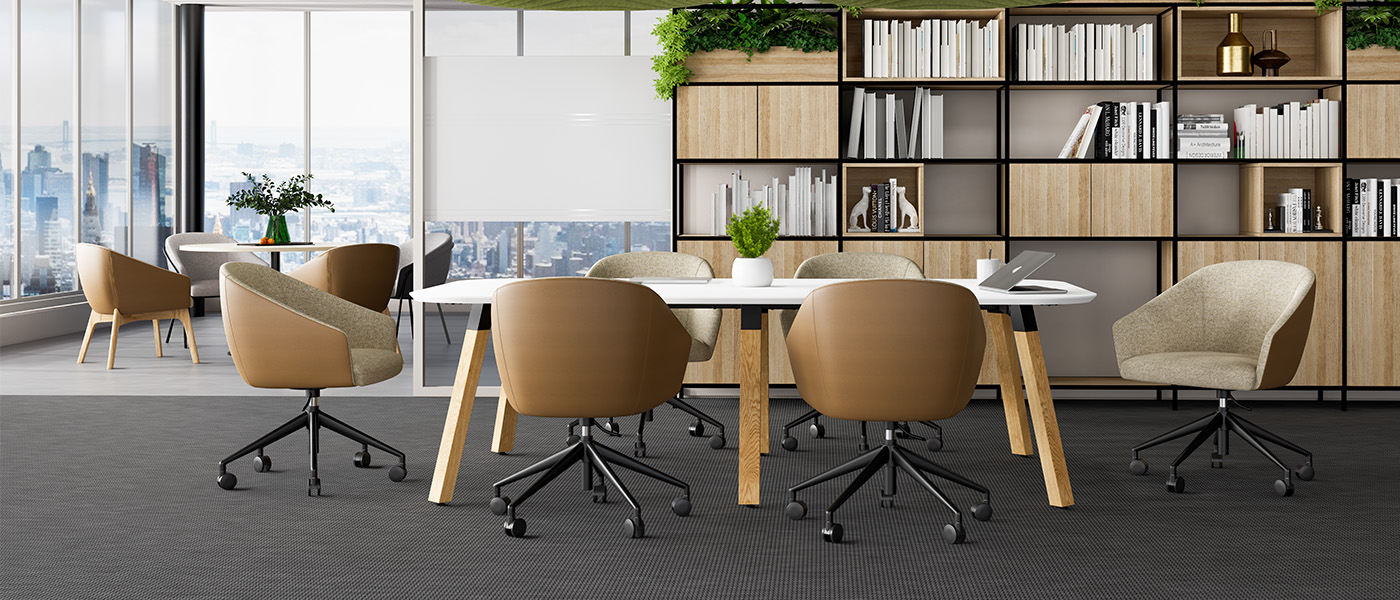
This has accelerated demand for collaboration furniture: modular tables, soft seating, mobile whiteboards and technology enabled meeting settings. Open collaboration zones and informal breakout areas allow teams to shift easily between quick discussions and deeper project work, supporting both planned and spontaneous interaction.
Global data also supports this shift. Since 2021, organisations have increased the proportion of collaboration spaces in their offices, rebalancing floorplans away from desk heavy layouts. In Australia, this trend is reinforced by a growing expectation of destination offices, spaces that offer greater amenity and experience than home office environments.
While collaboration is driving office design, focused individual work has not disappeared. This has led to a more nuanced approach: fewer fixed desks, but better designed focus spaces. Rather than assigning a permanent workstation to every employee, leading organisations are creating quiet zones, focus pods and bookable workstations that support deep concentration when required.
This aligns with the principles of activity based working, which match space to task rather than to people. For this reason, Australian organisations are rethinking desk design rather than removing it entirely. The emphasis has shifted toward:
Shared and height adjustable desks for flexibility
Acoustic solutions such as screens, booths and soft finishes to manage noise
Smart storage that supports hot desking while maintaining personal organisation
Australian workplace guidelines also highlight the importance of managing noise to reduce stress and distraction, particularly in open environments. This reinforces the need for high quality acoustic furniture alongside open collaboration spaces.
A Balanced, Activity Based Approach
The most successful Australian workplaces adopting activity based workplace design, are providing a mix of spaces that support different tasks across the day. Australian case studies and research show this approach improves space efficiency, employee experience and long term adaptability when implemented holistically.
For OLG Office, this means helping partners balance workstations, collaboration settings, seating, storage and acoustic solutions into one cohesive environment, ensuring furniture supports both people and performance.
As Australian offices continue to evolve, the question is no longer how many desks are needed, but how effectively the workplace supports collaboration, focus and choice.
Biophilic design in 2025 will move beyond aesthetics to measurable outcomes. Designers will use nature-inspired elements like circadian lighting systems to enhance productivity and reduce fatigue. Beyond plants and natural materials, expect data-backed integration of features like air purification systems using green walls or sensory experiences.
HomeBeyond the deskThe Rise of Collaboration Zones vs. Individual Desks in the Modern Workplace
The Rise of Collaboration Zones vs. Individual Desks in the Modern Workplace
written by OLG
For decades, the individual desk was the cornerstone of office design. It represented ownership, focus and routine. However, as work has become more collaborative, digital and less location dependent, that model is being challenged. Today’s workplaces are increasingly defined by collaboration zones, purpose designed spaces that support teamwork, problem solving and social connection, rather than rows of permanently assigned desks.
This shift has accelerated with the rise of hybrid working. Research shows employees are no longer coming into the office primarily to focus on individual tasks, which can often be done more effectively at home. Instead, they come in to collaborate, connect and build culture. As a result, organisations are re evaluating how much space they dedicate to individual desks versus shared, collaborative environments.
Collaboration Zones: Supporting Why People Come to the Office
The strongest driver of office attendance in Australia is collaboration. CBRE research shows that employees primarily return to the workplace to connect with colleagues, collaborate in person and build relationships—activities that are difficult to replicate remotely.
This has accelerated demand for collaboration furniture: modular tables, soft seating, mobile whiteboards and technology enabled meeting settings. Open collaboration zones and informal breakout areas allow teams to shift easily between quick discussions and deeper project work, supporting both planned and spontaneous interaction.
Global data also supports this shift. Since 2021, organisations have increased the proportion of collaboration spaces in their offices, rebalancing floorplans away from desk heavy layouts. In Australia, this trend is reinforced by a growing expectation of destination offices, spaces that offer greater amenity and experience than home office environments.
The Evolving Role of Individual Desks
While collaboration is driving office design, focused individual work has not disappeared. This has led to a more nuanced approach: fewer fixed desks, but better designed focus spaces. Rather than assigning a permanent workstation to every employee, leading organisations are creating quiet zones, focus pods and bookable workstations that support deep concentration when required.
This aligns with the principles of activity based working, which match space to task rather than to people. For this reason, Australian organisations are rethinking desk design rather than removing it entirely. The emphasis has shifted toward:
Shared and height adjustable desks for flexibility
Acoustic solutions such as screens, booths and soft finishes to manage noise
Smart storage that supports hot desking while maintaining personal organisation
Australian workplace guidelines also highlight the importance of managing noise to reduce stress and distraction, particularly in open environments. This reinforces the need for high quality acoustic furniture alongside open collaboration spaces.
A Balanced, Activity Based Approach
The most successful Australian workplaces adopting activity based workplace design, are providing a mix of spaces that support different tasks across the day. Australian case studies and research show this approach improves space efficiency, employee experience and long term adaptability when implemented holistically.
For OLG Office, this means helping partners balance workstations, collaboration settings, seating, storage and acoustic solutions into one cohesive environment, ensuring furniture supports both people and performance.
As Australian offices continue to evolve, the question is no longer how many desks are needed, but how effectively the workplace supports collaboration, focus and choice.