Quiet Luxury and the Evolution of the Modern Workspace
written by OLG
In an era shaped by hybrid work, sustainability targets and heightened expectations of wellbeing, the Australian workplace is undergoing a subtle but meaningful transformation. Amid louder trends driven by technology and collaboration, quiet luxury has emerged as a defining influence on how offices are designed, furnished and experienced. Unlike traditional luxury, quiet luxury is not about excess or overt branding. It is about, quality, longevity and purpose, values that increasingly resonate within commercial office environments.
Defining Quiet Luxury in the Workplace
Quiet luxury originates from fashion and residential design, but its principles translate seamlessly to the workplace. At its core, quiet luxury prioritises timeless aesthetics, superior materials, precision craftsmanship and intuitive functionality over short-lived trends.
Australian workplace design increasingly reflects this shift. Award-winning local projects emphasise natural materials, subdued colour palettes and a strong connection to place, creating environments that feel refined yet approachable rather than ostentatious. This calm sophistication aligns closely with employee expectations in a hybrid era, where the office must offer something beyond what can be achieved at home.
How Quiet Luxury Translates to Commercial Office Furniture
Commercial office furniture plays a central role in expressing quiet luxury. Rather than statement pieces, the focus is on products that perform exceptionally well over time. High-quality task chairs with ergonomic precision, workstations with meticulous detailing, and modular systems that adapt as organisations evolve are hallmarks of this approach.
Durability is critical. Furniture that is built to last not only supports day-to-day usability but also aligns with sustainability goals. In Australia, the push toward furniture designed for longevity, repair and reuse is accelerating as organisations respond to ESG commitments and Green Star benchmarks. A chair or desk with a long lifecycle reduces replacement costs, embodied carbon and waste, an understated but powerful form of value that defines quiet luxury in commercial settings.
Aesthetics that Supports Focus and Wellbeing
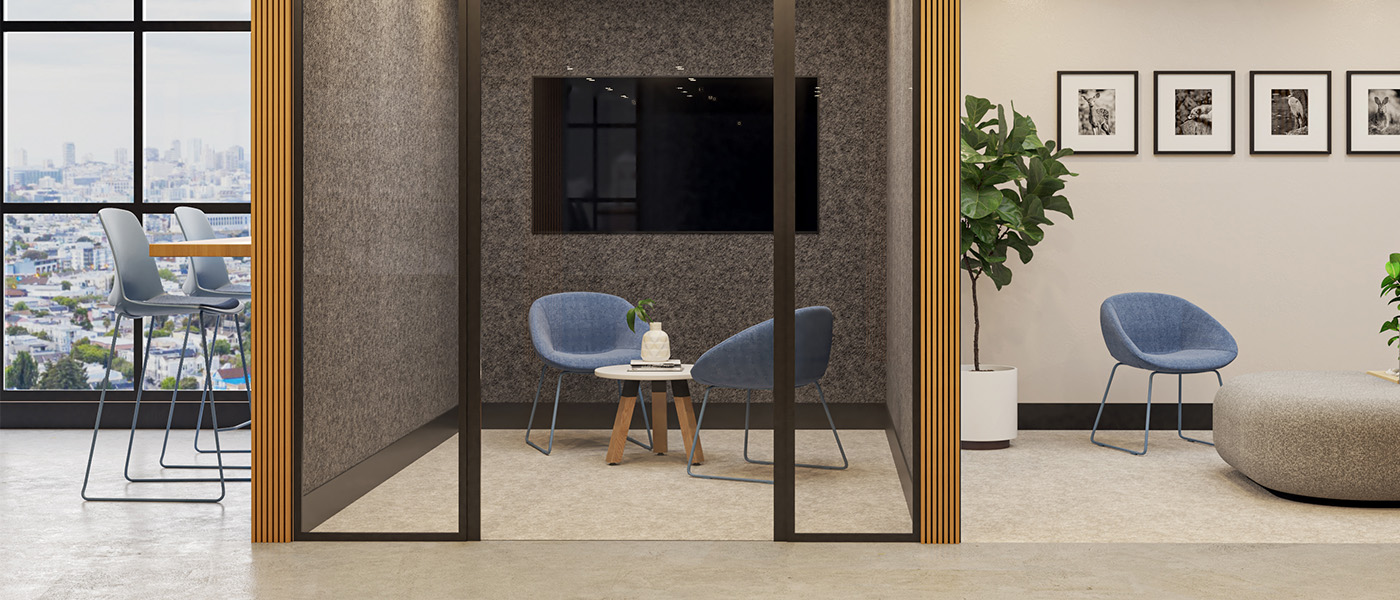
Quiet luxury enables, tactile surfaces and natural finishes that create a sense of calm rather than visual noise. In open-plan and activity-based workplaces, acoustics are equally important. Acoustic furniture, soft finishes and thoughtfully designed quiet spaces are becoming standard inclusions as Australian research shows employees can lose more than an hour a day to noise and interruptions in poorly designed offices. Quiet luxury addresses this not through heavy soundproofing alone, but through integrated design, where furniture, materials and layout work together to create balance.
Usage, Flexibility and Value Over Time
Hybrid work has fundamentally reshaped how furniture is used. According to Australian Bureau of Statistics data, more than 36% of Australians worked from home in 2025, with most adopting hybrid patterns rather than full-time remote work. This variability places new demands on furniture: it must be adaptable, robust and intuitively usable by different people, day after day.
Quiet luxury responds through modular, reconfigurable systems that maintain their aesthetic integrity while supporting changing needs. Rather than disposable solutions, organisations are investing in fewer, better products that deliver long-term value, financially, environmentally and experientially.
A Subtle Benchmark for the Future Office
For Australian organisations, quiet luxury offers a compelling framework for future workplaces. It balances refinement with restraint, design with function, and aesthetics with responsibility. In commercial office furniture, this translates to thoughtful investment in quality, products that feel good to use, age well over time and quietly reinforce an organisation’s values.
As the role of the office continues to evolve, quiet luxury is not a trend to be noticed, but a standard to be lived with, one that aligns seamlessly with the expectations of modern Australian workplaces.